The short version
A hospitality rider is the one-page list of what the people in the act need on the day: how many are coming, a room to change in, a meal or a buyout, water on stage, guest list spots, parking at the load-in door, and lodging when the drive is long. The tech rider covers the gear; this covers everyone standing next to it. It is a request, and the size of the room decides how much of it is reasonable.
01 The tool above
A free hospitality rider template, filled in before you start.
The template at the top of this page opens on a finished rider for a seven-piece band with horns. Change the numbers, the names and the date, then download it. Most bands only need to touch the travel party, the meal line and the guest list.
- No account, ever. Not to edit, not to download the PDF, not to share a link. The rider is saved in your own browser.
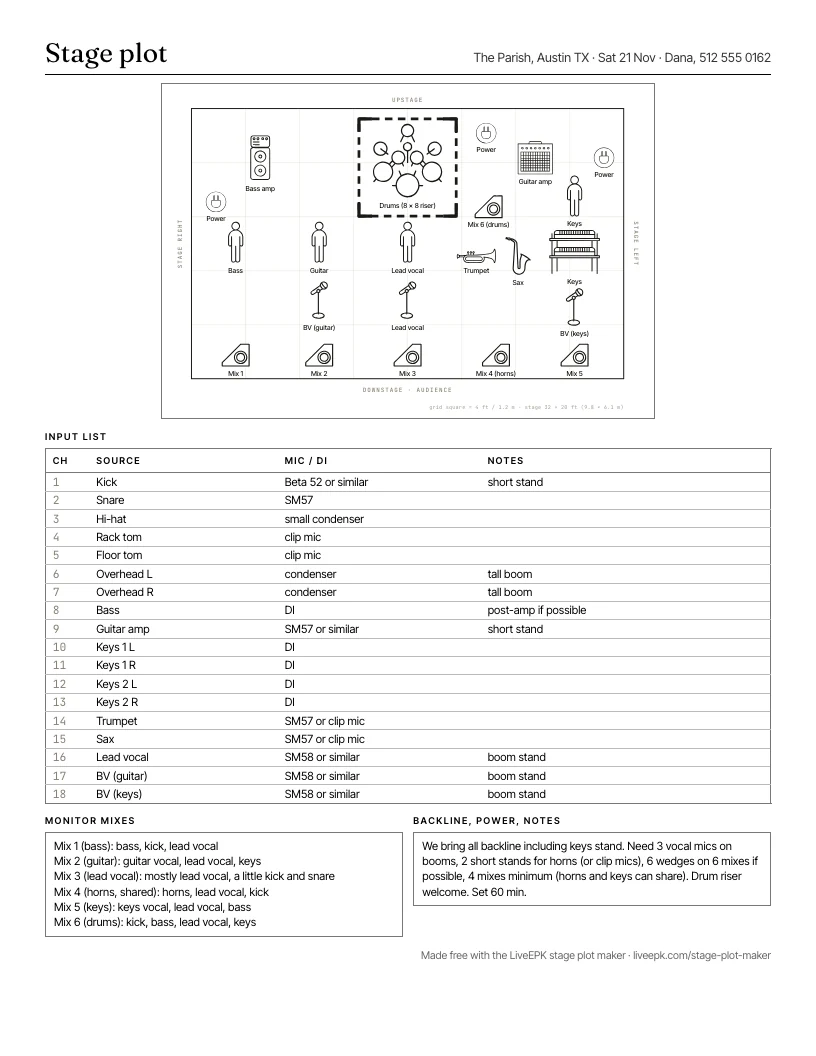
- One page. The hospitality rider prints on its own. Tick “Include the stage plot page” to add the stage plot and input list, or fill in the Tech rider tab for the whole advance packet in one PDF.
- Eight fields, three of them optional. An empty field does not print, so a bar-gig rider can be three lines.
- Letter or A4, and it works on a phone.
It is the same tool as the tech rider template and the stage plot maker, opened on its third tab, so the three documents a venue asks for come out of one place.
02 What it is
What is a hospitality rider? The part about people, not gear.
A rider is an addition to a booking: the list of things the act asks the promoter to provide. The technical rider covers the show: sound, stage, power, lighting. The hospitality rider covers the people: food, drinks, a dressing room, guest list, parking, and a bed when the drive home is too long. Together they are what a promoter means by an artist rider.
The two go to different people. The sound engineer reads the tech rider. The promoter, the venue manager, or whoever runs the green room reads the hospitality rider, often while ordering the food. That is why touring acts send them as separate pages, and why the hospitality page should make sense to someone who has never heard your record.
On a big show the rider is attached to the contract and the promoter signs off on it. For a club or a bar it is a list of requests sent with the advance email. Either way, the most useful thing it does is turn five phone calls into one page.
03 What goes in it
What goes in a hospitality rider: eight lines.
- Travel party. How many people are coming and who they are: musicians, crew, a tour manager, someone selling merch. How many vehicles. Every other line scales from this number, so it goes first.
- Dressing room. A room that locks, or at least a safe corner for cases and a change of clothes. Mirror, chairs, water, towels. If a corner is fine, say so; a small room appreciates knowing.
- Meals and drinks. A hot meal for the party and when you would eat it (after sound check, or between sets), or a buyout per person instead. Water on stage. Dietary needs and allergies in plain words. This is the line the promoter acts on first.
- Guest list. How many spots, and when you will send the names.
- Parking and load-in. How many vehicles, which door, what time. Someone to meet you who knows where the power is.
- Lodging, optional. Only when the offer includes it: how many rooms, what kind, and how close to the venue. Most acts set a distance, such as shows more than 150 miles from home.
- Merch table, optional. The size, where it goes (near the exit, with light), and who sells.
- Anything else, optional. When settlement happens, a photo pass, somewhere off the floor between sets.
The template above has a field for each, in that order. Leave one empty and it does not print.
04 An example hospitality rider
Hospitality rider example: a seven-piece band with horns.
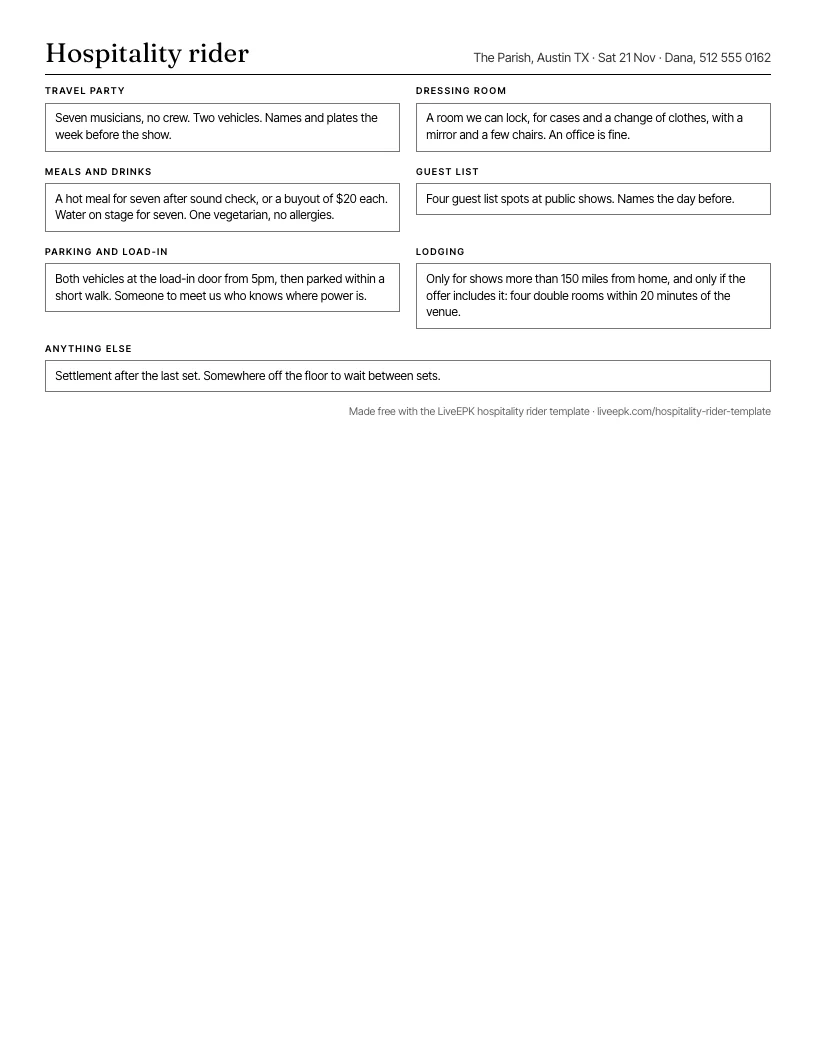
This is the example the template opens on, laid out the way it prints. The band is invented; the rider is written the way a working band with a two-vehicle load-in asks. Every line is a number or a plain request, and the two expensive lines (the meal, the rooms) come with an alternative or a condition.
Travel party
Seven musicians, no crew. Two vehicles. Names and plates the week before the show.
Dressing room
A room we can lock, for cases and a change of clothes, with a mirror and a few chairs. An office is fine.
Meals and drinks
A hot meal for seven after sound check, or a buyout of $20 each. Water on stage for seven. One vegetarian, no allergies.
Guest list
Four guest list spots at public shows. Names the day before.
Parking and load-in
Both vehicles at the load-in door from 5pm, then parked within a short walk. Someone to meet us who knows where power is.
Lodging
Only for shows more than 150 miles from home, and only if the offer includes it: four double rooms within 20 minutes of the venue.
Anything else
Settlement after the last set. Somewhere off the floor to wait between sets.
Two choices in it are worth copying. The meal line offers a buyout, because plenty of venues have no kitchen or close it before the band eats, and a promoter who can say yes to one of two options usually does. The lodging line has a condition, because asking a local club for hotel rooms reads as not knowing the difference between a local show and a tour.
05 Room by room
What to put in a hospitality rider, by the size of the room.
- A bar or a small club. Water on stage, a safe place for cases, two to four guest list spots, and parking for the load-in. That fits in two lines at the bottom of the tech rider; the Tech rider tab has a Hospitality line for exactly that.
- A club or theater with a green room. A dressing room, a meal or a buyout for the party, a guest list sized to the band, and parking for every vehicle. This is where a separate one-page hospitality rider starts to earn its keep.
- A festival. The festival usually sends its own advance form: wristbands, artist parking passes, the dressing room or trailer, catering times. Your rider is where you copy the answers from.
- A wedding or a private event. A meal for the band (planners call it the vendor meal) and when you would eat it, a room to change in, water, and parking near the load-in. The couple or the planner reads this, so write it for them. Guest list does not apply.
Water, a place to sit, and somewhere safe for the cases are things every room can do. A deli tray with a named brand of hummus belongs on the rider of an act that sells out the room.
06 Two documents people mix up
Hospitality rider vs tech rider: two pages, two readers.
The tech rider covers the show: lineup, schedule, backline, what you need from the venue, power, lighting, monitor mixes, and the stage plot and input list attached. The engineer and the production manager read it. Make it with the tech rider template, which has six example riders.
The hospitality rider covers the people: the travel party, the dressing room, meals and drinks, guests, parking, lodging, the merch table. The promoter or the venue manager reads it.
An artist rider (or band rider) is the two together. When a promoter asks for “your rider,” send both pages. The template above prints them in one PDF: fill in the Tech rider tab, keep the hospitality rider on, and tick the stage plot page.
07 Writing it so it gets honored
How to write a hospitality rider that gets honored.
- Scale it to the offer. A rider for a $300 bar gig and one for a festival slot should not be the same page. Keep a short version and a full version.
- Use numbers. Seven people, two vehicles, four guest spots, a $20 buyout. A number can be answered with a yes; “adequate catering” cannot.
- Offer the alternative. A meal or a buyout. A dressing room or a safe place for cases. The promoter picks the one the room can do.
- Put allergies in plainly. It is the line that matters most to the person ordering the food, and the one most riders leave out.
- Do not copy a famous rider. The legendary ones are great reading and terrible templates. The famous no-brown-M&Ms line was a check that the promoter had read the technical rider, not a snack request.
- One page. If it runs longer, most of it is decoration.
08 Sending it
How to send a hospitality rider: with the advance, and in one place.
Attach it to the advance email with the tech rider, a week or two before the show, and ask two questions in the email: what time is the meal, and which door do we load in? The answers are most of what the rider is for. When there is a contract, both riders are attached to it, so they are agreed before the date is.
Then put the PDF in the Downloads section of your press kit, next to the tech rider and the stage plot, so the next promoter finds all three without asking. The free EPK builder includes that section. Keep the venue and date fields generic in the copy you host (“Hospitality rider, 2026”) and fill them in per show when you export. The template saves in your browser, so that is a thirty-second job.
09 Quick answers
Hospitality rider: common questions.
- What is a hospitality rider?
- The part of an artist’s rider that covers the people rather than the show: how many are traveling, a dressing room, meals and drinks, guest list, parking, and lodging when the drive is long. It goes to the promoter or venue manager, not the sound engineer. The tech rider covers the gear.
- What should a hospitality rider include?
- Eight things: the travel party, a dressing room or a safe place for cases, meals and drinks (or a buyout), guest list spots, parking and load-in, lodging if the offer includes it, a merch table if you sell, and a line for anything else, such as when settlement happens. One page. The template on this page has a field for each.
- What is the difference between a hospitality rider and a tech rider?
- The tech rider covers sound, stage, power, lighting and the schedule, with the stage plot attached, and goes to the engineer or production manager. The hospitality rider covers food, drinks, rooms, guests, parking and lodging, and goes to the promoter. Together they make up the artist rider.
- Is an artist rider the same as a hospitality rider?
- An artist rider is usually both: the technical rider and the hospitality rider, sent together with the booking. When a promoter asks for “your rider,” send both pages. This template makes the hospitality page, and the same PDF can carry the tech rider and the stage plot.
- What is a meal buyout?
- Cash instead of a meal: the venue pays each person in the travel party a set amount, such as $20, when it has no kitchen or the kitchen closes before the band eats. Write it as the alternative in the meals line (“a hot meal for seven, or a buyout of $20 each”) and the promoter picks the one the room can do.
- Do small bands need a hospitality rider?
- A short one. For a bar or small club, two or three lines at the bottom of the tech rider cover it: water on stage, a place for cases, guest list spots, parking for the van. Give it its own page once there is a meal, a dressing room or lodging to arrange.
- Is this hospitality rider template free, and where does my rider go?
- Free, no account. The rider is saved in your own browser and in the share link, nowhere else. Download the PDF and it is yours. If you want it kept with your press kit, “Save it to your EPK” carries it into a free LiveEPK account, together with the tech rider and stage plot if you made them.
Send the whole advance from one link.
Sign up free and the rider comes with you: saved to your account with the tech rider and the stage plot, and published to your press kit’s Downloads in one click, next to the photos a promoter opens anyway. Updated in one place when the lineup changes. Free to build and publish, no credit card.
Save this rider to my EPKNeed the technical side too? The tech rider template has six example riders, from a solo act to a seven-piece.