Home/Band EPK
Band press kit · Band EPK
The band EPK: one link with everything a venue asks a band for.
A venue booking a band wants to know four things fast: what you sound like, whether you can hold a room, what it takes to put you on stage, and who to email. A band EPK answers all four at one link. What goes in it, a real example, three band bios, the stage plot and tech rider, and how to build one free in about twenty minutes.
The short version
A band EPK (electronic press kit) is one link that gets a band booked. It holds a 60-word bio, your best two or three tracks, a video of the band playing to a room, and credited photos. Then your dates, the rooms you have played, a stage plot and tech rider for the engineer, and a booking contact. LiveEPK builds and publishes that page free, and makes the stage plot and rider too.
LiveEPK for bands, in plain terms
- Free to build and free to publish. Your kit goes live at a generated link; $5 a month puts your band’s name in the address.
- Built for the booking email. A venue opens the link on a phone and scrolls, with nothing to download.
- Your music and video play on the page. Spotify, Apple Music, Bandcamp and SoundCloud. Video from YouTube and Vimeo. Paste one link and the player is set.
- A stage plot and tech rider, drawn in the free tools here and published to your kit’s downloads as a two-page PDF.
- A booking page on the $5 plan. Set formats, fees, the setlist and your availability on their own link, for the bands that play weddings and private events.
- Publishes in English, Spanish or Russian. Headings, dates and statuses switch; what you write stays as you typed it.

01 What goes in it
What goes in a band EPK: eight things, in the order a venue looks for them.
- Your name, what you play, where you are from, and how many of you there are, on the first screen. “Five-piece wedding and party band from Charlotte.” A venue sizes the stage and the fee from that one line.
- A short bio, around 60 words. The sound, the rooms you play, one piece of proof, how long a set runs. Written in the third person, so a venue can paste it into a listing. Three to copy the shape of are further down.
- Two or three tracks, your best first. For a band, the recording is the audition for the room; the video is the audition for the crowd.
- A video of the band playing to people. A phone clip of a full room beats a studio video with no audience. Thirty seconds answers the question every booker is really asking: can they hold a room?
- Photos a venue can use. One wide band photo for the listing, one live shot, both credited. Hi-res downloads so nobody has to ask.
- A stage plot and tech rider. The band-only item. How many inputs, how many monitor mixes, what you bring and what you need from the house. An engineer reads it the afternoon of the show; a venue that sees one in the kit knows you have played real rooms.
- Dates and the rooms you have played. Upcoming shows with ticket links, and three or four past rooms or festivals a booker will recognize.
- A booking contact and your formats. A real email and a phone number, and whether you play as a full band, a trio or acoustic, with set lengths. A wedding band adds fees and availability on a booking page.
02 A real example
Band EPK example: open one and scroll it like a venue would.
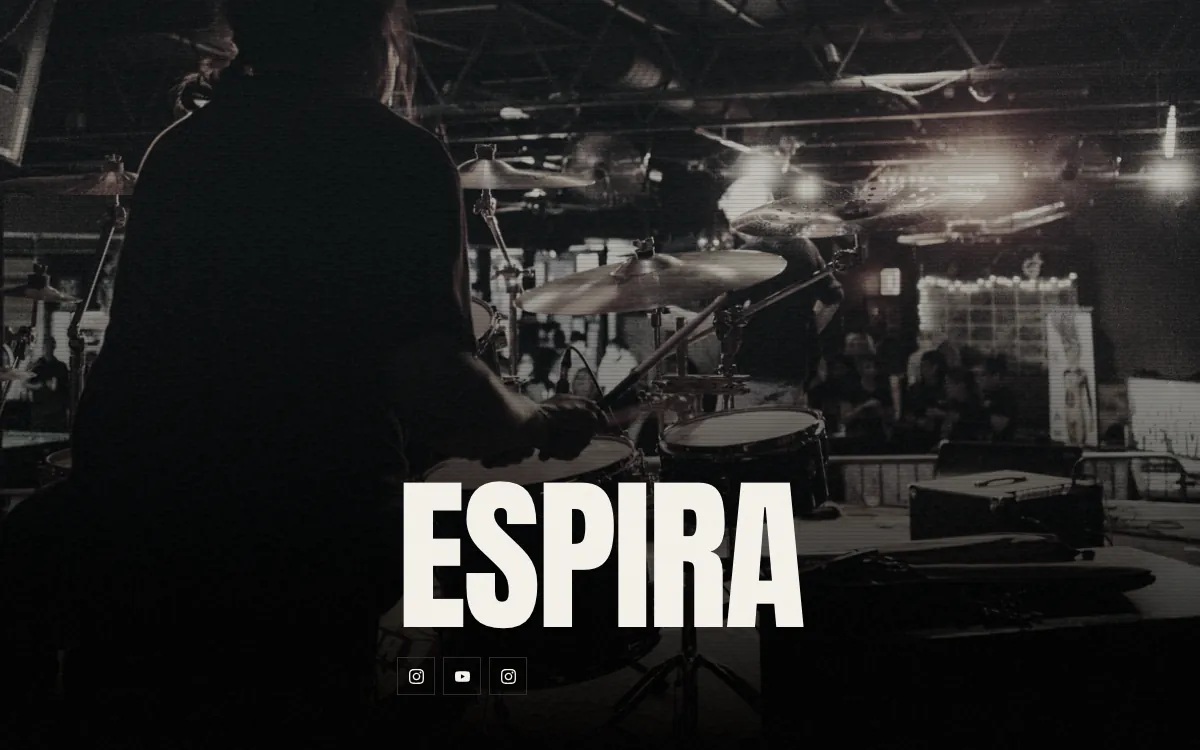
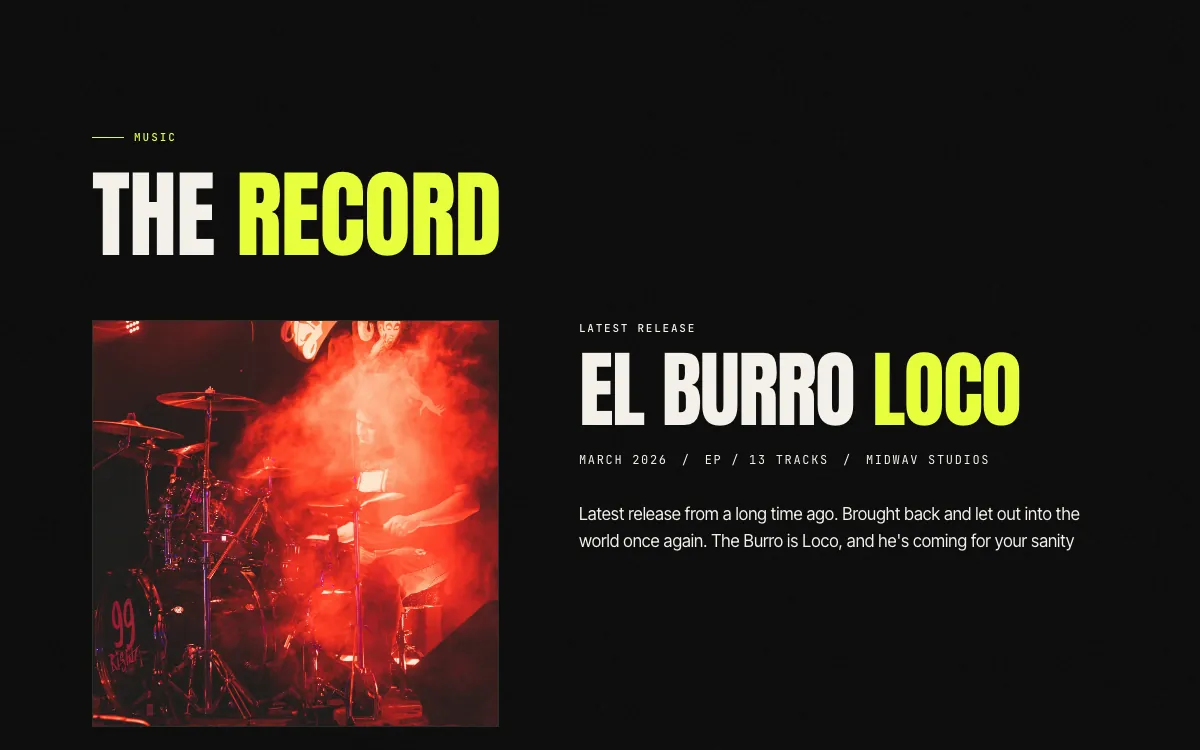
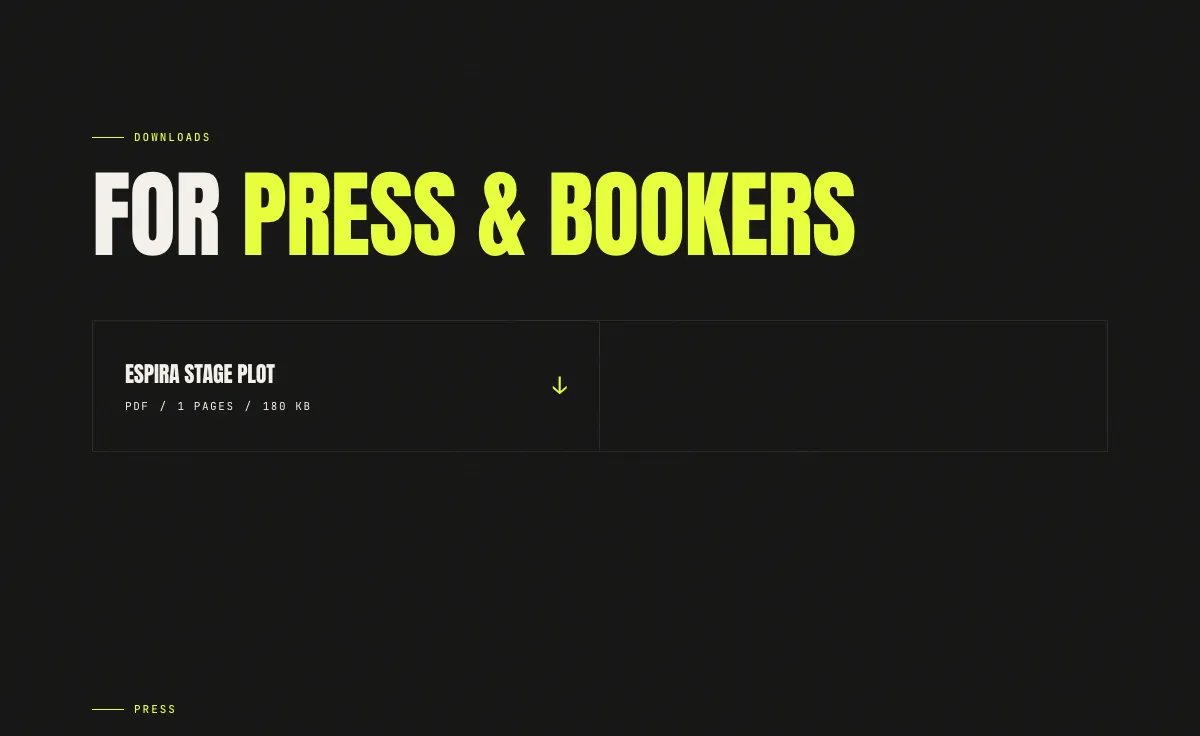
Espira is a Latin alternative rock band from San Antonio, together since 1998, on MidWav Records. Their kit has a Spanish home page and an English page. It shows the parts that get a band booked: the latest release with its cover and a player, three music videos and a live clip, and two press quotes. Below those sit the upcoming dates with ticket status and a one-page stage plot in the downloads, where the engineer looks for it.
A band that plays weddings and private events needs a second kind of page. The Saturday Linens, a sample five-piece wedding band we made up, shows it on the Marquee template. A 300-song setlist, three formats with set lengths, the venues they have played, testimonials, and a month-by-month availability grid. More finished band kits, with notes on why each works: EPK examples.
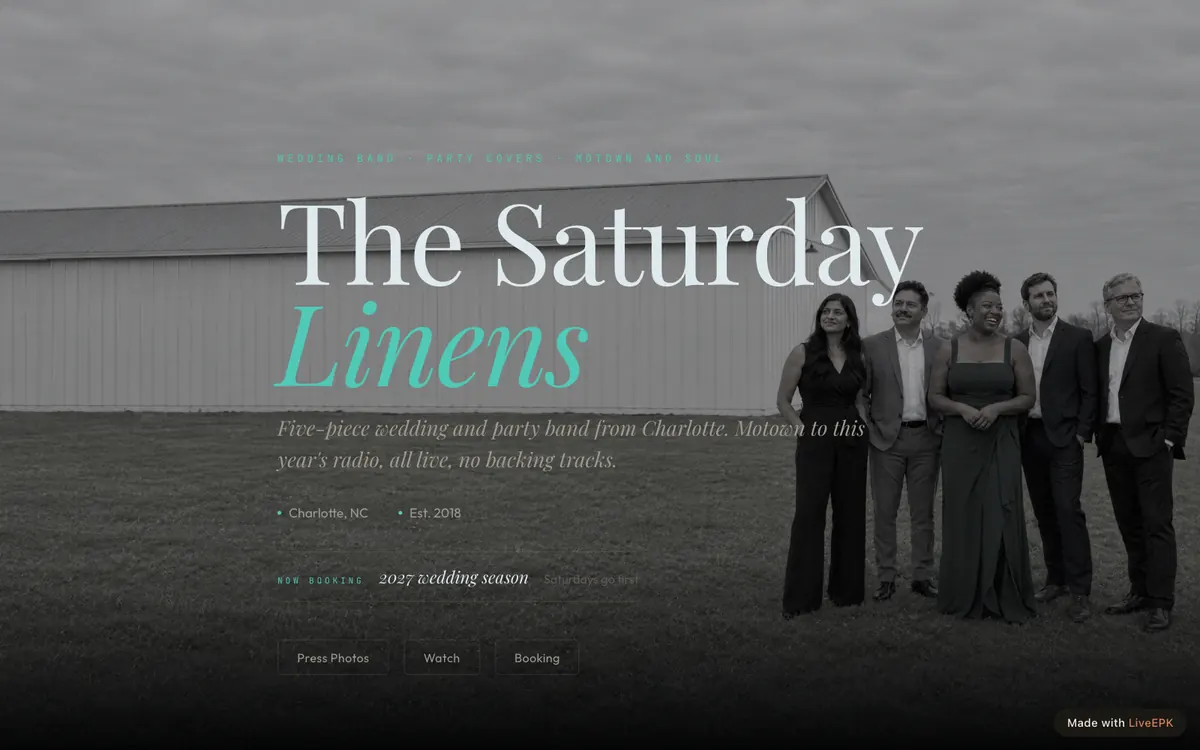
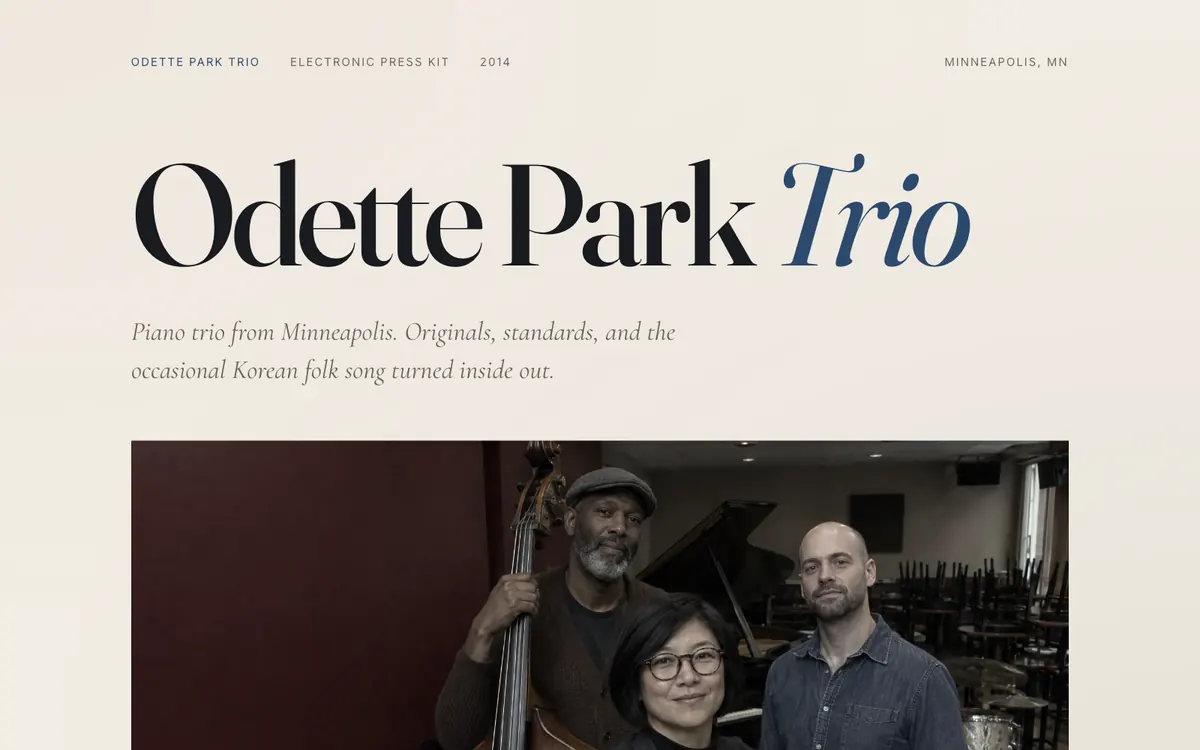
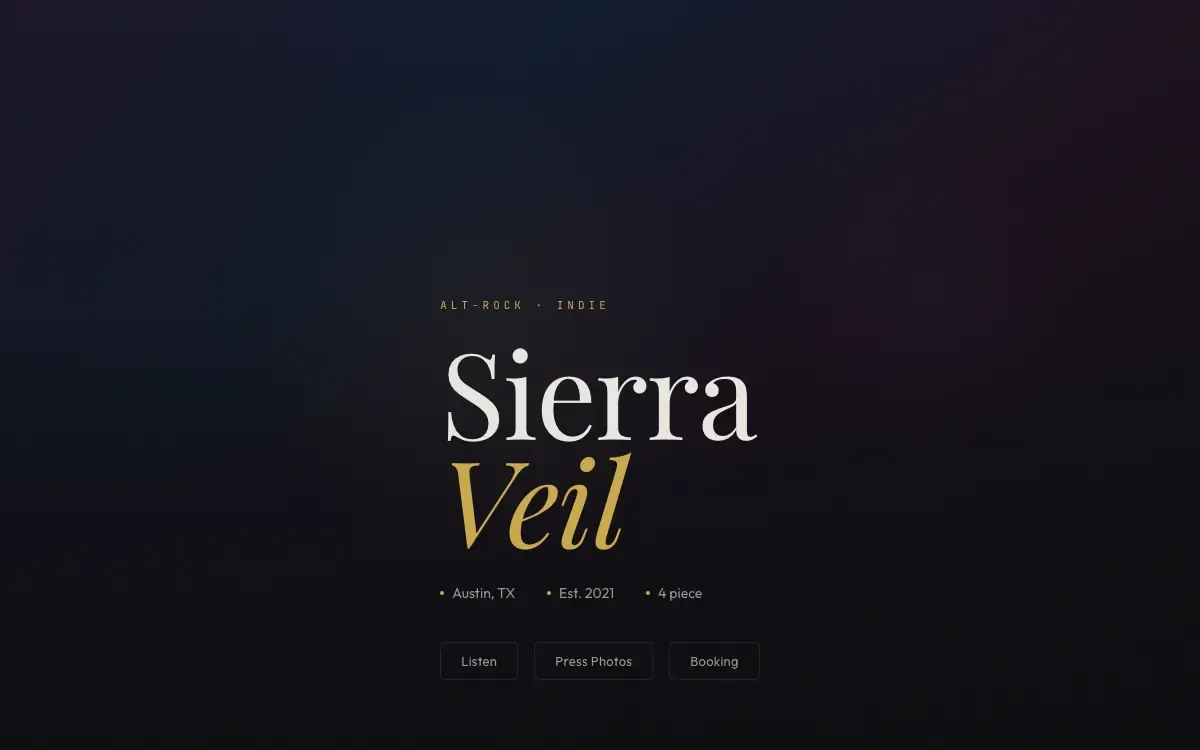
All three are sample acts we made up, labeled that way on their kits.
Build the band EPK free.
Pick a template, paste your Spotify and YouTube links, publish. Free.
Start your band EPK03 Band bio examples
Band bio examples: three short ones you can copy the shape of.
Each one says what the band sounds like, where it plays, one piece of proof and how long it can play, in the third person. All three bands are made up.
Rock band
Sierra Veil is an alt-rock four-piece from Austin, Texas, formed in 2021. Their second record, Glass Hours, took them on a 40-date run through the South and Midwest, and they play 45-minute to 75-minute sets with their own backline. They are booking fall 2026.
Wedding and party band
The Saturday Linens are a five-piece wedding and party band from Charlotte, North Carolina, playing Motown, soul and this year’s radio, all live with no backing tracks. Together since 2018, they play weddings and private events in sets of three hours, or four with breaks, from a 300-song book, and they learn one song for the couple at no charge.
Jazz trio
The Odette Park Trio is a Minneapolis piano trio led by pianist and composer Odette Park, with Marcus Dray on bass and Eli Tarn on drums. Together since 2014, they play clubs, concert series and festivals across the Upper Midwest, and work as a polished acoustic trio for private events. Their third album, Small Hours, Large Rooms, came out in 2026.
Ten more, one per genre, with notes on what each gets right: musician bio examples.
04 The stage plot and tech rider
The band stage plot and tech rider: the part a solo act can skip.

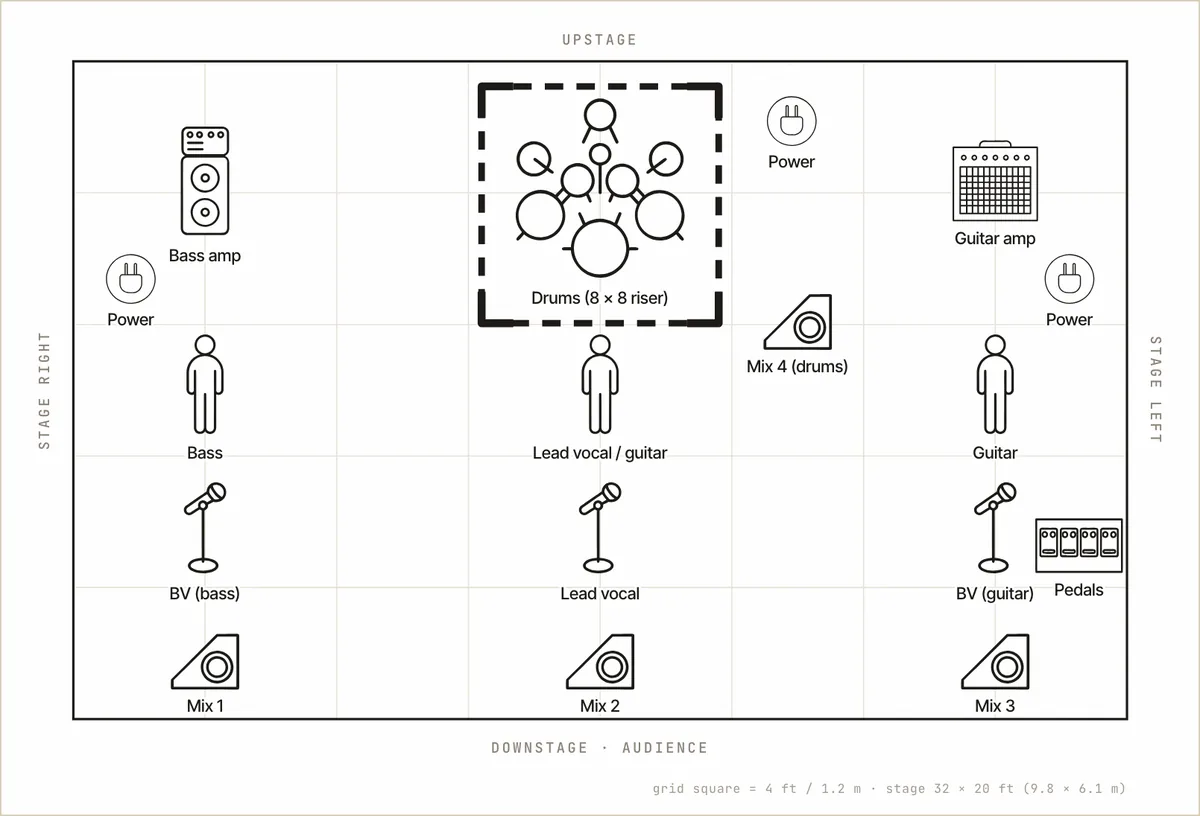
A band is the act that needs the paperwork. The engineer wants to know how many channels to patch, how many wedges to drag out, whether there is a drum riser, and what you bring. A one-page stage plot with an input list and a one-page rider answers that before load-in, and a venue that sees them in the kit knows the band has done this before.
- The stage plot shows who stands where, each input numbered, and the monitor mixes. The stage plot maker draws it from a preset for a trio, a four-piece or a seven-piece with horns.
- The tech rider says what you bring, what you need from the house, the set length and sound check time, in a page. The tech rider template fills it in from the same plot.
- Both go in the kit’s downloads as one two-page PDF, next to the hi-res photos, so the engineer and the booker find them in the same place.
05 How to build it
How to make a band EPK: five steps, about twenty minutes.
- Sign up and pick a template. The Stage for a loud band, The Studio for a quieter one. You can switch later without losing anything.
- Type the name line and the short bio. Genre, city, how many of you. Then the 60-word bio from the examples above.
- Paste your links. Two or three tracks from Spotify or Bandcamp, one live video from YouTube. They play on the page.
- Add photos, dates and a booking email. One wide band photo, one live shot, your next shows, a real email.
- Make the stage plot and rider, then publish. Ten minutes in the free tools; the PDF lands in your downloads. Publish, and put the link in your next booking email.
The longer walkthrough, section by section: how to make an EPK.
06 Solo acts
Artist EPK vs band EPK: what changes for a solo act.

An artist EPK holds the same eight things with two differences. The name line says how you play live, alone, with tracks or with a band, because that changes the room and the fee more than anything else about you. And the stage plot shrinks to a line in the downloads: one vocal mic, one DI, one wedge. The Studio template suits a songwriter; The Spotlight suits a louder act. A solo act that fronts a hired band for bigger rooms lists both formats, the way a wedding band lists a trio and a full band.
07 Template or link?
Band EPK template: a file to fill in, or a page that updates itself.
If a festival or a grant asks for a document, the EPK template is a free two-page Word and PDF download with a box for everything above, and a filled-in example. For everyone else, send the link. A PDF shows the dates and the lineup from the day you saved it; the kit shows this month’s. The music press kit template walks through each section with example copy if you want to write it before you build it.
08 What it costs
Free to publish. Five dollars to put it at your band’s name.
The editor, three templates, the stage plot and rider tools and publishing at a generated link cost nothing. A free kit carries a small LiveEPK badge. The $5 plan ($50 a year) puts the kit at yourband.liveepk.com with no badge. It adds the booking page, the Marquee template, an email composer that drafts the pitch with your music and dates in it, and a switch that lets Google list the kit. Everything the free plan includes, in plain terms: the free EPK builder.
09 Quick answers
Band EPKs: questions bands ask.
- What is a band EPK?
- A band EPK is an electronic press kit for a band: one web page with the bio, music, video, photos, dates, a stage plot and tech rider, and a booking contact. You send the link to venues, festivals and press instead of a PDF and a folder of attachments.
- What should a band EPK include?
- Eight things, in the order a venue looks for them: the name line with genre, city and lineup size; a 60-word bio; two or three tracks; a video of the band playing to a room; credited photos with hi-res downloads; a stage plot and tech rider; dates and past rooms; a booking contact with your formats and set lengths.
- Does a band need a stage plot in its EPK?
- Yes, if you play rooms with a house engineer. The plot and the rider tell the engineer how many inputs and monitor mixes to set up before you load in, and a venue reads them as a sign the band has played real rooms. The stage plot maker and tech rider template here are free.
- How long should a band EPK be?
- One scrolling page a booker can read on a phone in two minutes. Three tracks, one video, a handful of photos. The full discography and the long bio can live further down for the people who want them.
- Is there a band EPK template?
- Yes. The EPK template on this site is a free two-page Word and PDF download with a box for every section above and a filled-in example. Most bands do better with the link, because it stays current; the file is for the festivals and grants that ask for a document.
- Can a band EPK be free?
- Yes, start to finish. LiveEPK builds and publishes the kit free at a generated link with a small badge, with no card and no time limit. $5 a month puts it at your band's name without the badge.
One link, everything a venue asks for.
Free to build and publish. Stage plot and tech rider included. No credit card.
Start your band EPK